

Commercial Offset Printing in Hong Kong: How to Plan the Right Print Project
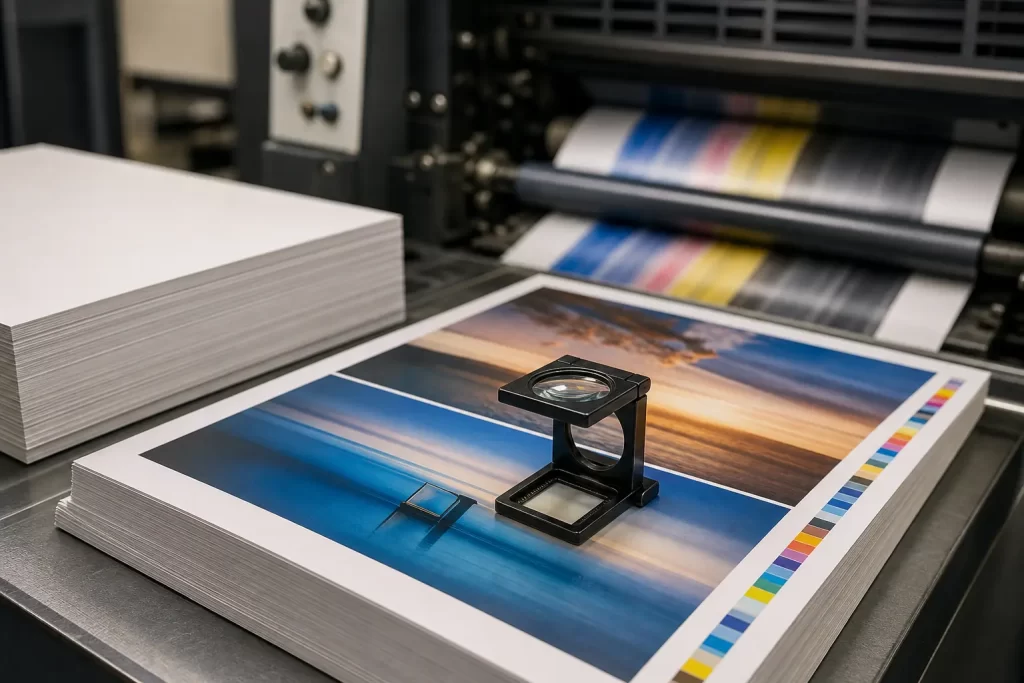
Offset printing remains the most efficient choice for high-volume, colour-critical commercial print projects. Planning before you send artwork reduces costs, avoids delays and helps deliver consistent results when producing books, packaging, labels, stationery, menus and event materials in Hong Kong.
Decide whether offset is the right method
Offset excels for medium to large runs where per-unit cost falls with quantity and where accurate spot or process colour matching is important. Digital printing may be better for variable-data or very small runs. When considering offset, confirm that the run length, desired colour approach and finishing needs align with commercial offset workflows.
Define the job clearly: quantity, format and target audience
Record the intended quantity range, final trimmed size, page count (for books) or panel structure (for packaging). Clarify the distribution channel and the environment where the printed piece will be used; hospitality menus, retail packaging and outdoor promotional materials have different durability and finishing priorities. Early clarity on these items prevents scope changes that create additional press or finishing costs.
Paper selection and stock attributes
Paper choice affects colour, tactile quality, folding and finishing. Specify weight range and surface (coated, uncoated, silk, matte) and consider paper opacity for two-sided work. For packaging and labels, discuss substrate strength and suitability for the intended finishing (glueing, folding, die cutting). Ask the printer for relevant technical guidance and paper swatches so you can judge how ink and finishing will appear on the chosen stock.
Colour control: process, spot colours and proofs
Decide whether to use four-colour process (CMYK) or add spot colours for brand-critical hues. Spot colours can give stronger brand consistency for logos and specific colours; complex packaging often combines both process and spot inks. Request a contract proof or press proof so you can check colour rendering and tonal range before full production. Refer to ISO 58041 for standardised process-control guidance on colour separations, proofs and production prints. Familiarity with industry colour management practices reduces rework.
Finishing, cutting and binding considerations
Finishing choices often define the perceived quality of the printed piece. Options to consider include foil stamping, blind embossing/debossing, spot UV, varnishes, die-cutting and a range of binding methods for books and booklets. Each finishing route has specific tolerances (creasing vs cutting, minimum edge distance for foil) that should be accommodated in artwork and structural design to avoid marking, cracking or registration issues.
Artwork preparation and file checks
Prepare print-ready files with correct colour mode (CMYK for process inks), embedded fonts or outlined text, and appropriate bleed and crop marks. Supply images at sufficient resolution for the final print size to avoid unintended softening. Ask the printer for their preferred PDF standard or preflight checklist, and include clear layer order for varnishes or spot colours used for finishing separation.
Proofing, approvals and prepress communication
Build time into your schedule for proof reviews and any necessary file fixes. Use annotated proofs to communicate adjustments and keep approvals in writing. Effective prepress communication reduces the chance of unexpected outcomes on press, particularly where tight colour matching or precise finishing is required.
Logistics, quality checks and local considerations in Hong Kong
Factor in local transit, customs (if materials are imported), warehousing and delivery to multiple venues when planning timelines and budgets. Arrange at least one pre-production check with the printer to confirm plate-making and press parameters. Agree quality checkpoints for first-off sheets and short-run verification before full press runs commence.
Budgeting and risk control
Allocate budget lines for proofs, plates, makeready and finishing as these are core components of offset workflows. Expect variability in consumables and finishing complexity; early specification of finishing effects and paper choice reduces unforeseen costs. Keep a contingency allowance for last-minute artwork fixes or structural revisions.
Illustrative planning checklist (for guidance only)
– Confirm intended quantity and delivery locations.
– Specify final trim size, bleeds and page/panel structure.
– Choose paper family and surface finish; request swatches.
– Select colour approach: CMYK, plus spot colours if needed.
– Identify required finishing and binding techniques.
– Prepare print-ready files and request a preflight from the printer.
– Schedule proofs, approvals and first-off checks.
– Coordinate logistics for receipt of printed goods in Hong Kong.
Summary
Successful offset projects start with clear specifications for quantity, format, paper, colour and finishing. Early engagement with your printer on proofs, prepress checks and logistics reduces risk and helps ensure the final product matches expectations. Planning those decisions before production begins keeps budgets predictable and quality consistent.