

Offset Printing vs Digital Printing: Which Is Right for Your Project?
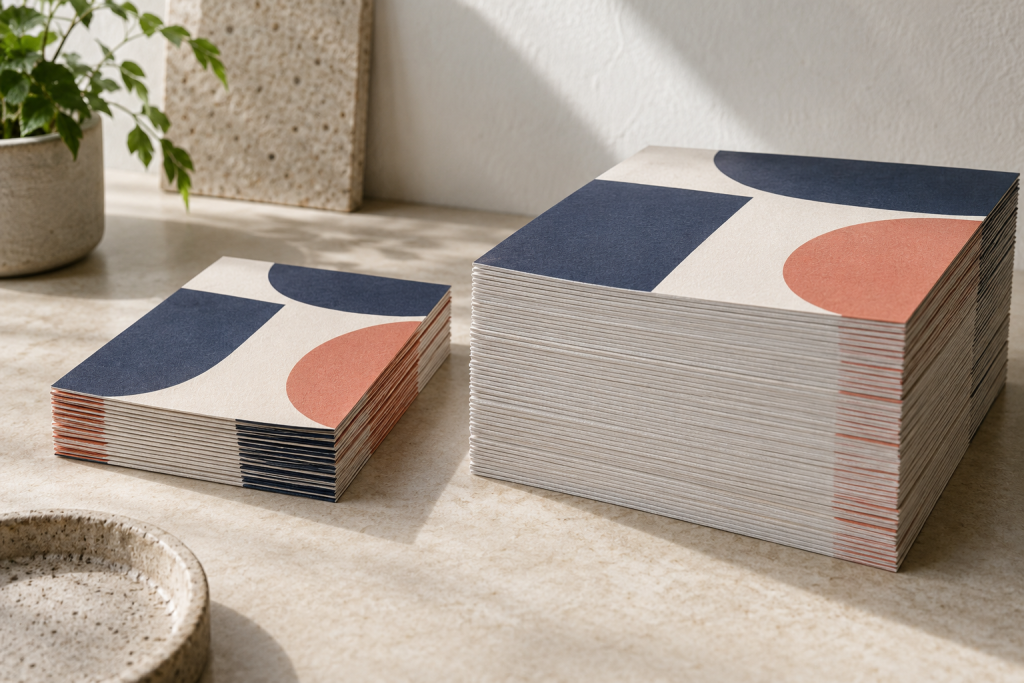
Choosing between offset and digital printing affects cost, colour control, material options and how you prepare files. Practical differences help brand managers, publishers and hospitality operators in Hong Kong match a method to project goals.
How offset printing works and when it helps
Offset printing transfers ink from a metal plate to a rubber blanket and then onto the paper. That indirect process suits consistent, high-quality colour across large quantities because setup elements are fixed before the run begins. Offset is often the best choice for long runs, tight colour matching with spot inks, and a wide choice of coated and uncoated substrates.
How digital printing works and when it helps
Digital printing reproduces images directly from a computer file using toner or liquid inks. It removes the need for plates, which reduces initial setup work. Digital is well suited to short runs, projects that need variable data (personalisation) and jobs that require frequent revisions between batches.
Cost considerations without specific figures
Offset involves upfront setup steps that are shared across many copies, so unit cost typically improves as volume increases. Digital avoids those setup steps, which makes it more economical for smaller quantities or when each item differs. Avoid basing decisions on price alone; matching print method to run length and the need for variable content gives better value.
Colour fidelity, spot colours and finishing
Offset accommodates traditional spot inks and tight Pantone matches, which is useful for brand-critical colour. Digital presses have improved colour handling and can use extended-gamut workflows, but some spot-colour results may require proofing and calibration. Both methods can be combined with finishing such as foil stamping, embossing, spot UV, die or laser cutting and binding; choice of finishing often depends on the substrate and the production workflow rather than print engine alone.
Paper, substrate and quality control
Offset presses accept a wide range of papers and heavier stock without special pretreatment. Digital presses have made strides on thicker and textured stocks, but availability varies by press model. Discuss paper samples and run proofs early so the chosen press and finishing plan work together to meet tactile and durability goals.
Workflow, proofs and file preparation
Both methods benefit from finalised, print-ready files. Offset commonly requires prepress steps such as plate imposition; digital skips plates but still needs correct colour profiles, bleed and trapping where necessary. Proofing practices differ: digital proofs can represent a final look quickly, while contract proofs or press checks may be recommended when precise colour matching or complex finishing is required. Follow ICC colour-profile best practice for consistent results and ask suppliers for proofing options that match the chosen print route (ICC).
Which method to pick for common scenarios
Choose offset when project priorities include long run lengths, exact spot-colour matching, or specific paper and finishing that perform best on a traditional press. Choose digital when the project needs short runs, personalisation, rapid iteration between batches, or low initial setup. For many projects, a hybrid approach is practical: use digital for short or personalised runs and offset for larger quantities or where exact colour control is essential.
Summary
Offset and digital printing each have clear strengths. Offset delivers consistency and broad substrate compatibility at scale; digital offers flexibility, low setup overhead and easy personalisation for small batches. Match the method to run length, colour requirements, material choices and whether variable data is required.